
Abstract
Keller's customer-based brand equity framework locates a brand's value in what customers know about it, its awareness and its image. Aaker's brand personality framework describes the human traits people attribute to brands. We use both to analyse three iBOY websites: an online saree boutique, a college redesign concept and a venture studio platform. In each case the decisive design act was choosing which knowledge or trait had to land on the first screen, heritage, credentials or momentum, and then repeating it consistently across every page.
Keywordsbrand equity; brand personality; website branding; brand identity design; redesign strategy
1Introduction
Branding is often reduced to a logo and a palette. Brand research describes something more useful for web design: the knowledge and associations a visitor should leave with.
2Framework
Keller defines customer-based brand equity as the differential effect of brand knowledge on how consumers respond to a brand, with knowledge made of awareness and image [1]. Aaker identified five broad dimensions of brand personality: sincerity, excitement, competence, sophistication and ruggedness [2]. For a website, these frameworks turn into one question: which knowledge and which trait must land first?
3Case analysis
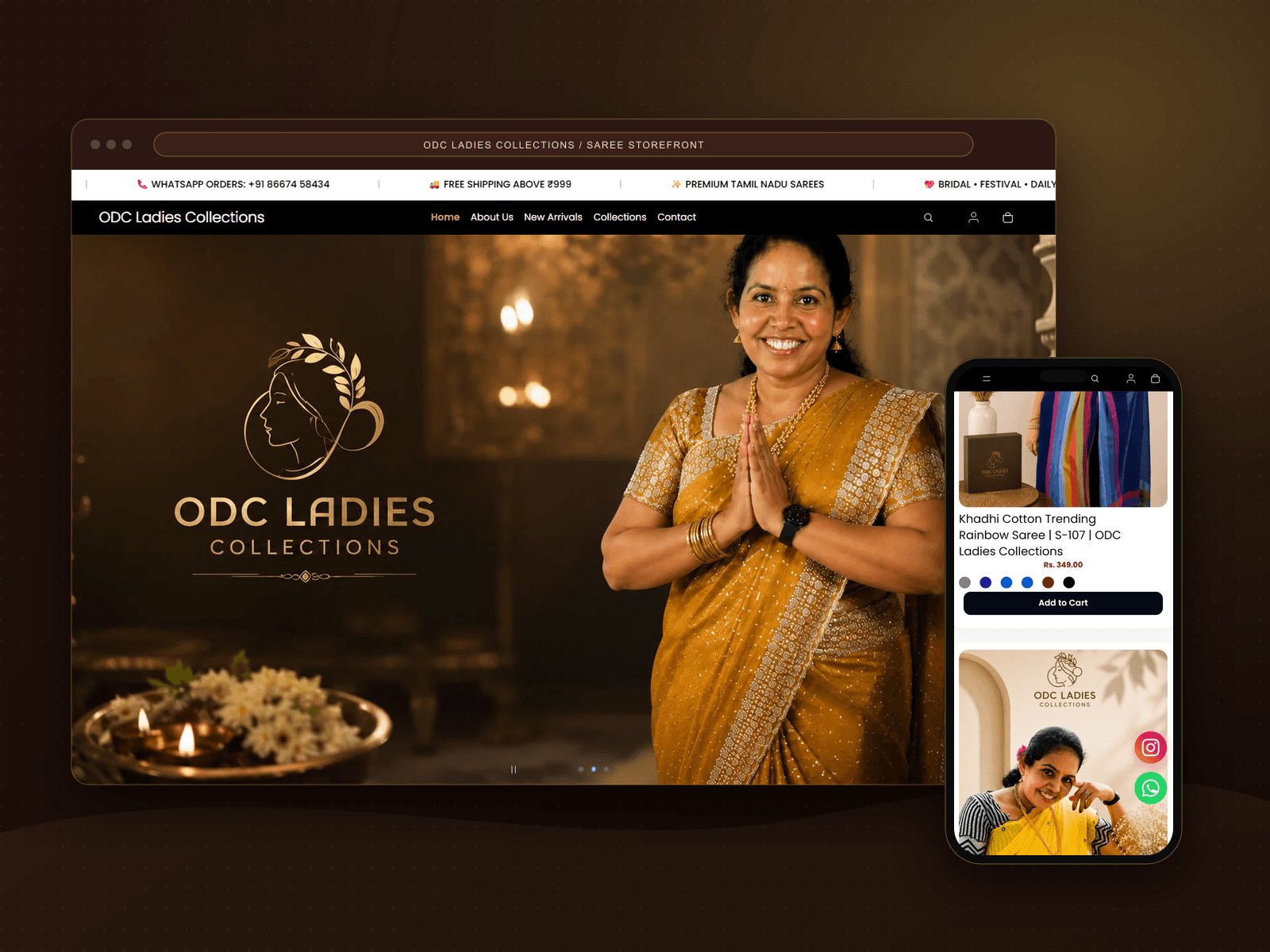
ODC Ladies Collections is a saree boutique in Oddanchathiram, Dindigul. Its image rests on tradition and trust built in person, so the online store leads with heritage while making it easy for customers across Tamil Nadu to browse cotton, silk and bridal sarees and order in a few steps. The dominant trait is sincerity.
For the Gobi Arts and Science College redesign concept, an autonomous NAAC A grade institution founded in 1968, the decisive knowledge is credentials and admissions. Credentials sit in the header and admission notices stay visible, signalling competence.
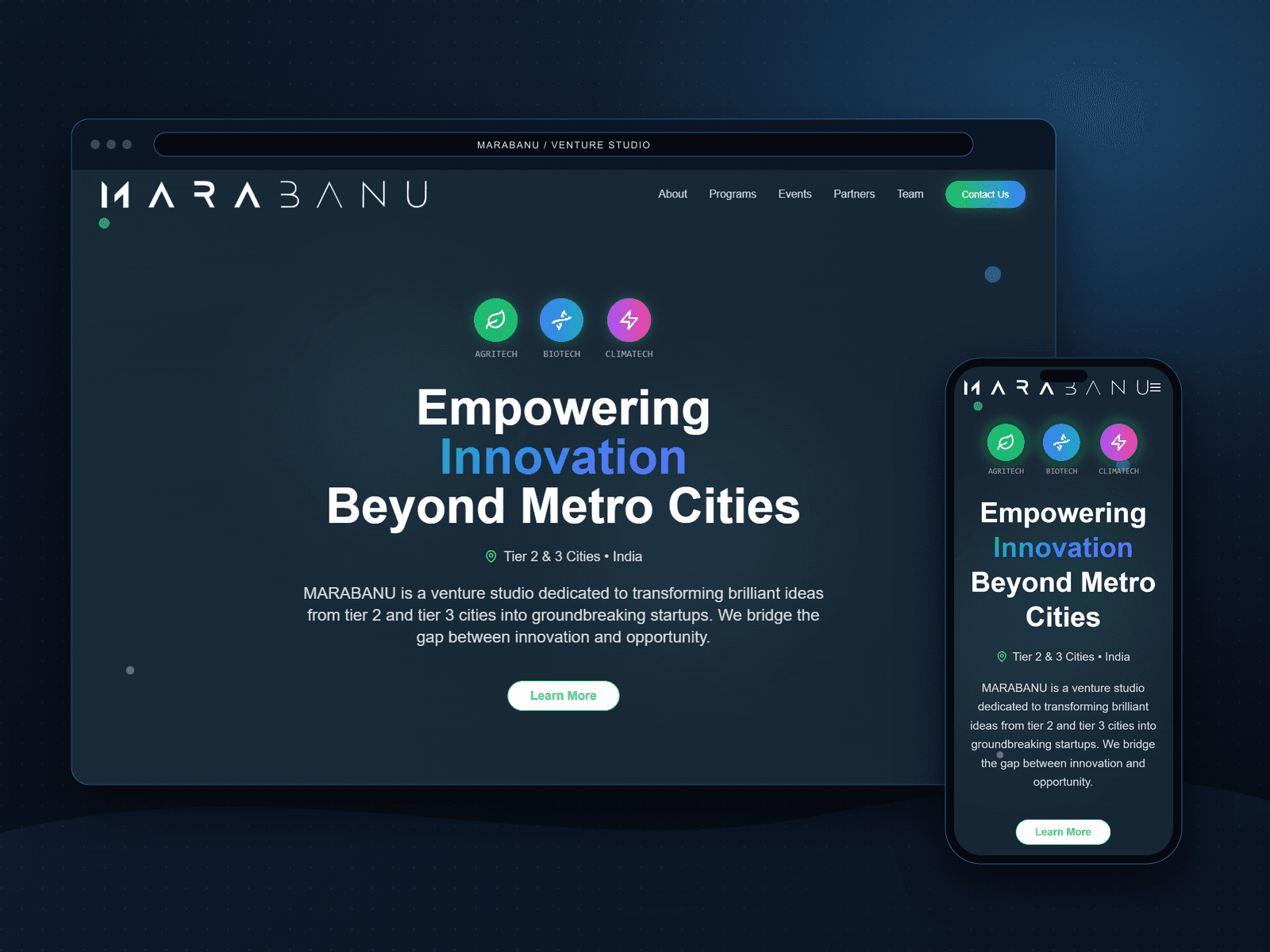
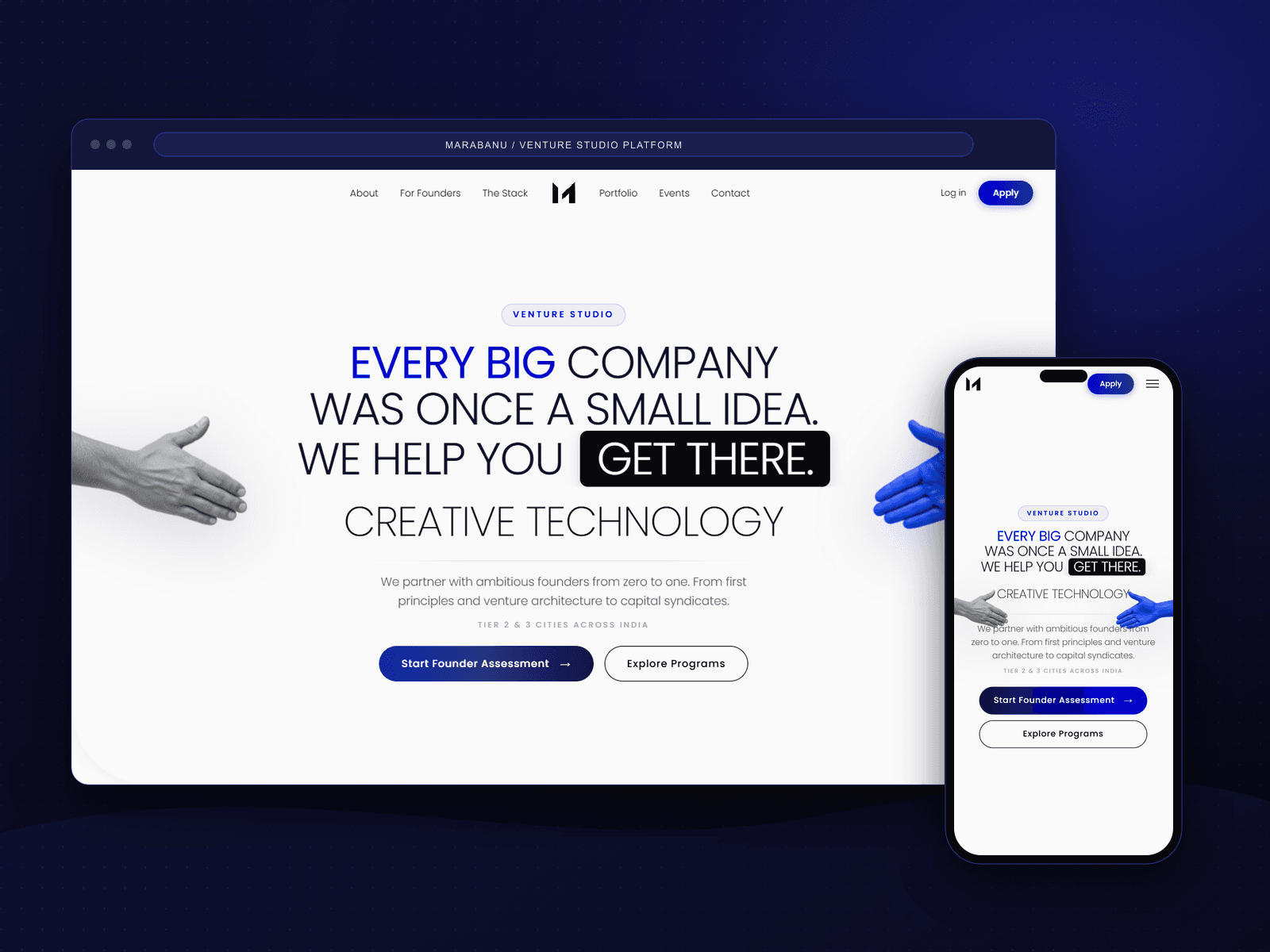
Marabanu, a venture studio working with founders in tier 2 and tier 3 cities across India, has had more than one live design. Its case study presents them side by side, and the redesign sharpened momentum, the excitement dimension, while keeping what people already recognised.
Chart 1
Brand personality scores by case
| Sincerity | Excitement | Competence | Sophistication | Ruggedness | |
|---|---|---|---|---|---|
| ODC Ladies Collections | 5 | 2 | 3 | 3 | 1 |
| GASC redesign concept | 3 | 2 | 5 | 3 | 1 |
| Marabanu | 3 | 5 | 4 | 3 | 2 |
Source: Studio interpretation of each brand on Aaker's five dimensions, 0 to 5; not a customer survey.
4Limitations
The trait assignments are interpretive, made by the studio rather than measured with customers. Measuring brand knowledge before and after a redesign would test whether the first screen changes what visitors remember.
5Conclusion
Brand equity theory gives web design a precise brief: decide the knowledge and the trait a first-time visitor must take away, put them on the first screen, and repeat them consistently everywhere else.
:root {
  --brand-ink: #0a0a0a;
  --brand-canvas: #faf9f6;
  --brand-accent: #25f07a;
  --brand-radius-card: 28px;
  --brand-weight: 425;
}

.headline { font-weight: var(--brand-weight); color: var(--brand-ink); }
.card { border-radius: var(--brand-radius-card); background: var(--brand-canvas); }Key findings
- 01Name the knowledge a visitor must leave with before designing.
- 02Choose the dominant personality trait and design for it consistently.
- 03Put the deciding fact on the first screen.
- 04In a redesign, keep what people recognise and change what blocks action.
Questions and answers
- What is brand equity?
- In Keller's framework, the effect that what customers know about a brand has on how they respond to it.
- What are the dimensions of brand personality?
- Aaker identified sincerity, excitement, competence, sophistication and ruggedness.
- Do I need a new logo for a rebrand?
- Not always. Clarifying the message, photography and first screen often changes perception more than a new logo.
References
- [1]Keller, K. L. (1993). Conceptualizing, measuring, and managing customer-based brand equity. Journal of Marketing, 57(1), 1 to 22. doi.org/10.1177/002224299305700101
- [2]Aaker, J. L. (1997). Dimensions of brand personality. Journal of Marketing Research, 34(3), 347 to 356. doi.org/10.1177/002224379703400304
Cite this paper
Jaiganesh D (2026). Brand equity on the web: knowledge, personality and the first screen in three iBOY cases. iBOY Research Notes, Paper 08. https://www.iboyhub.com/blog/brand-equity-on-the-web-three-iboy-cases
Projects examined
Jaiganesh D
Founder of iBOY Innovation Hub, a creative technology studio from Tamil Nadu, India, established in 2025. Writes about what the studio learns while designing and building real websites, products and AI systems.