
1Introduction
Many attractive websites produce few enquiries. The gap is rarely one missing feature. It is usually a mismatch between what the visitor feels, what they are asked to decide and how easy the next step is.
2Framework
Fogg's behaviour model holds that a behaviour occurs when motivation, ability and a prompt converge at the same moment [1]. Hick showed that the time needed to choose grows with the number of alternatives [2], which suggests that each screen should ask for as few decisions as possible.
Chart 1
Hick-Hyman law, T = a + b · log₂(n + 1)
| options on one screen n | T(n) |
|---|---|
| 1.00 | 350 |
| 2.00 | 438 |
| 3.00 | 500 |
| 4.00 | 548 |
| 5.00 | 588 |
| 6.00 | 621 |
| 7.00 | 650 |
| 8.00 | 676 |
| 9.00 | 698 |
| 10.0 | 719 |
| 11.0 | 738 |
| 12.0 | 755 |
| 13.0 | 771 |
| 14.0 | 786 |
| 15.0 | 800 |
| 16.0 | 813 |
| 17.0 | 826 |
| 18.0 | 837 |
| 19.0 | 848 |
| 20.0 | 859 |
Source: Computed from the formula with illustrative constants a = 200 ms and b = 150 ms; real constants vary by person and task.
3Case analysis
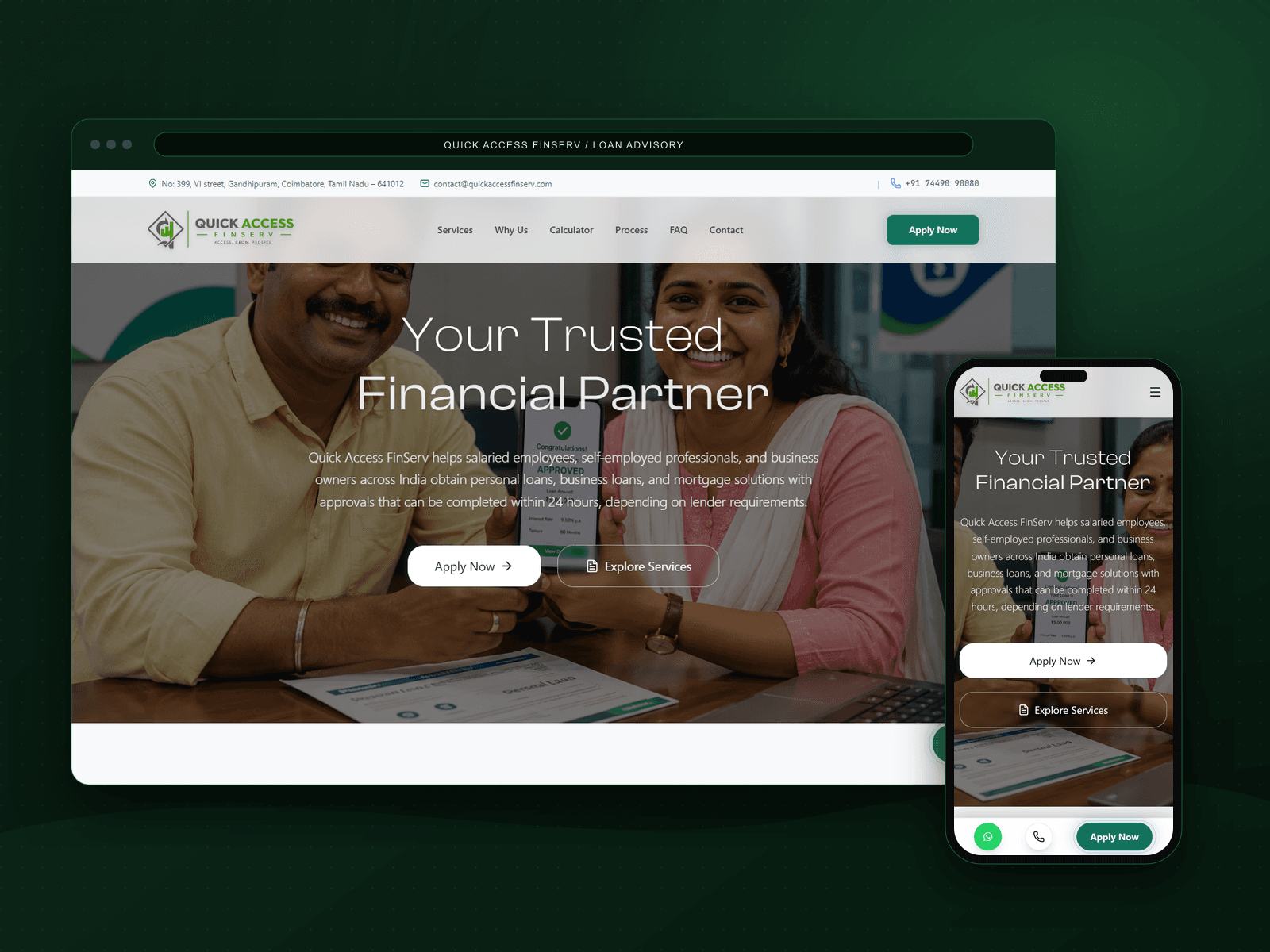
Quick Access FinServ helps borrowers compare and apply for personal, business, vehicle, agri and home loans through one advisor. Its page opens with the problems borrowers already know, bank visits, hidden fees and unexplained rejections, before showing a worked rate comparison and the loan products. In Fogg's terms, it raises motivation before it asks for action.
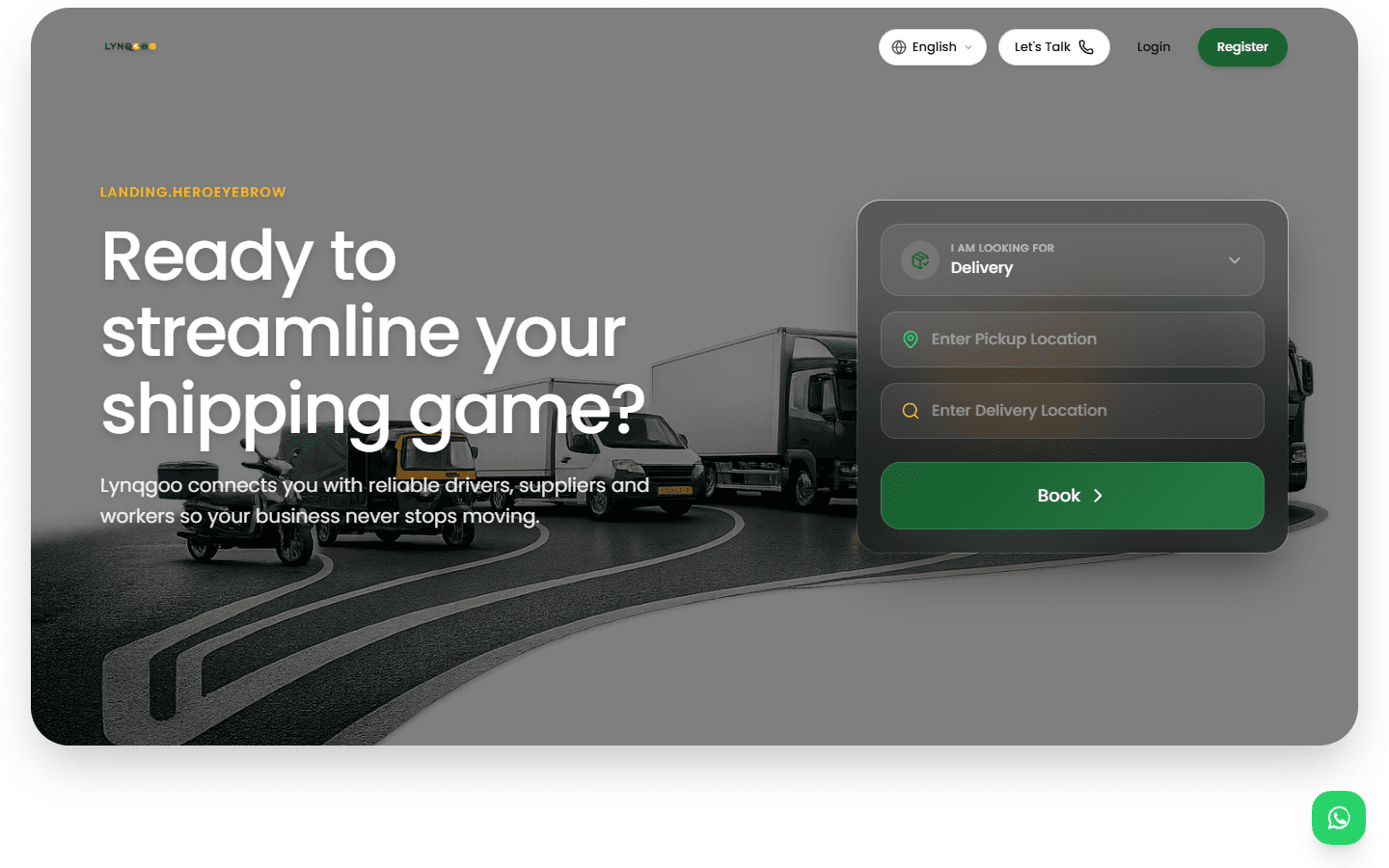
Lynqgoo connects local businesses with drivers, suppliers and skilled workers. An I am looking for selector at the top asks one question first, delivery, supply or workforce, so every later screen speaks to a single need, which reduces the number of alternatives in Hick's sense.
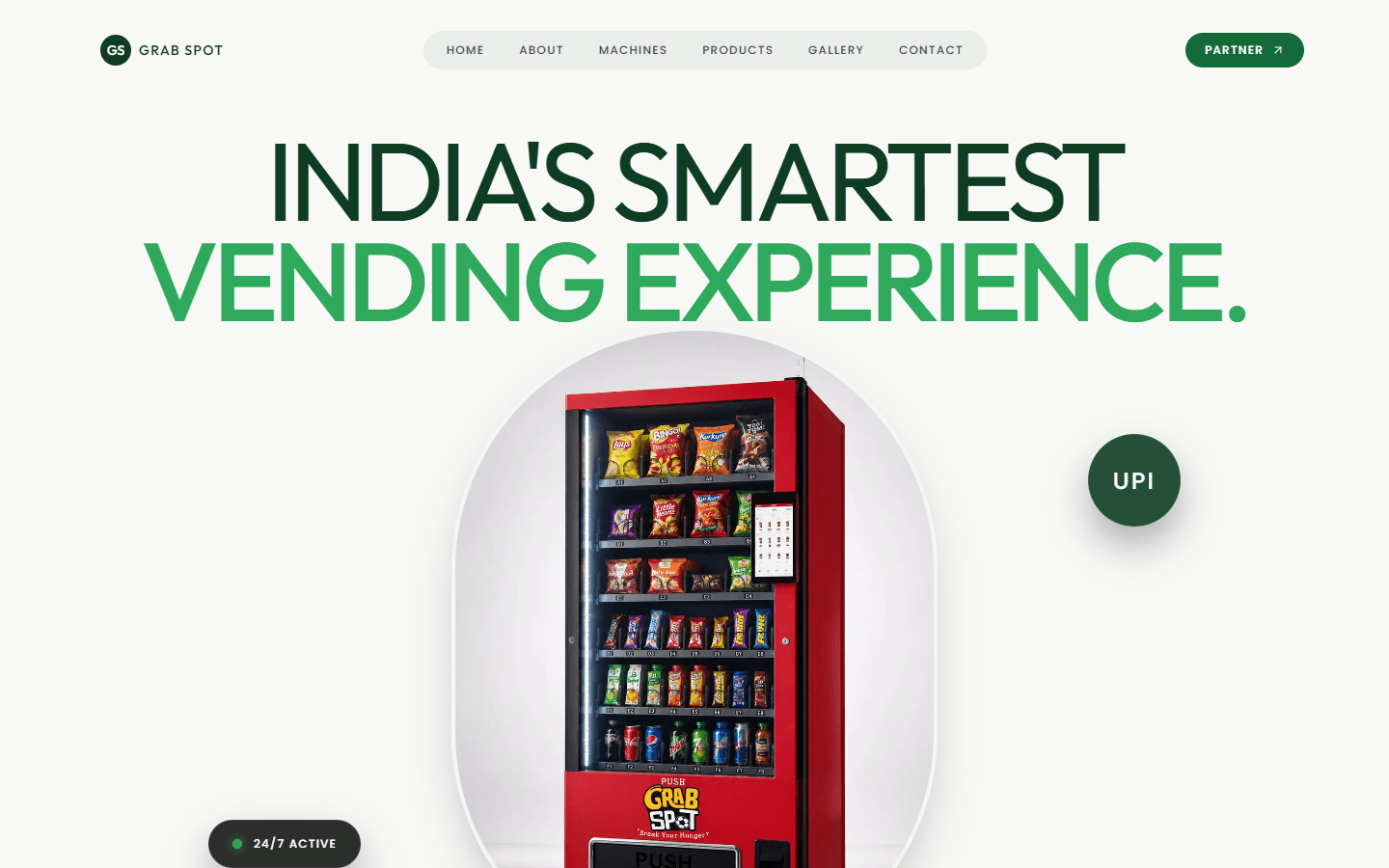
Grab Spot runs UPI enabled smart vending machines in Coimbatore. Its most valuable visitor is an institution that could host a machine, and a direct partner call to action stays easy to find on a phone, which supplies the prompt at the moment motivation is highest.
4After the click
A lead system continues after submission. On the iBOY site each brief is stored in the studio CRM, the sender receives a reference, and the reply time stated on the page is two business days. A short form, a stated response time and a fast human reply protect the motivation the page created.
import { z } from 'zod';

export const brief = z.object({
  name: z.string().trim().min(2).max(120),
  email: z.string().trim().email().max(180),
  services: z.array(z.string().trim().min(1)).min(1).max(12),
  details: z.string().trim().min(2).max(4000),
  website: z.string().max(200).optional(), // honeypot: people leave it empty
});

export type Brief = z.infer<typeof brief>;
export const isLikelyBot = (input: Brief) => Boolean(input.website);5Limitations
The analysis is qualitative and covers three projects. It does not report conversion rates, which would require controlled experiments of the kind described by Kohavi and colleagues [3].
6Conclusion
Websites become lead systems when they raise motivation with the visitor's own problem, reduce choices by asking for a path early, and keep one prompt in reach, then handle the enquiry quickly and honestly.
Key findings
- 01Open with the problem the visitor already feels.
- 02Ask for one choice early to simplify every later screen.
- 03Keep one clear action visible, especially on phones.
- 04State a reply time you can keep and route every enquiry to a person.
Questions and answers
- What is the Fogg behaviour model?
- A model in which a behaviour happens when motivation, ability and a prompt are present at the same time.
- What is Hick's law?
- The finding that the time to make a choice increases with the number of options available.
- How many fields should a lead form have?
- Only those needed to reply well, usually name, email, what the visitor needs and a short description.
References
- [1]Fogg, B. J. (2009). A behavior model for persuasive design. Proceedings of the 4th International Conference on Persuasive Technology. doi.org/10.1145/1541948.1541999
- [2]Hick, W. E. (1952). On the rate of gain of information. Quarterly Journal of Experimental Psychology, 4(1), 11 to 26. doi.org/10.1080/17470215208416600
- [3]Kohavi, R., Tang, D., and Xu, Y. (2020). Trustworthy Online Controlled Experiments: A Practical Guide to A/B Testing. Cambridge University Press. doi.org/10.1017/9781108653985
Cite this paper
Jaiganesh D (2026). Designing websites as lead systems: a case-based analysis of choice, motivation and friction. iBOY Research Notes, Paper 06. https://www.iboyhub.com/blog/designing-websites-as-lead-systems-a-case-based-analysis
Projects examined

Jaiganesh D
Founder of iBOY Innovation Hub, a creative technology studio from Tamil Nadu, India, established in 2025. Writes about what the studio learns while designing and building real websites, products and AI systems.